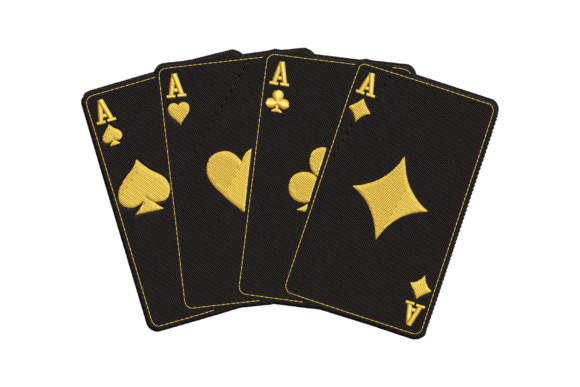
Ace Cards: Sophisticated Embroidery for Meaningful Handmade Gifts
As an embroidery designer who’s stitched thousands of personalized keepsakes—from baby blankets to wedding towels—I was immediately drawn to Ace Cards on Creative Fabrica. This isn’t just another playing card motif. It’s a high-roller moment in thread: four aces fanned with quiet confidence—spades, hearts, clubs, and diamonds—rendered in clean lines and balanced negative space. The first impression? elegant, timeless, and surprisingly warm. There’s no cartoonish flair or overworked detail—just refined symmetry and subtle sophistication. It feels classic, not costume-y; modern, not cold. That balance is rare—and invaluable when you’re building trust through handmade presentation.
What makes Ace Cards shine isn’t just aesthetics—it’s versatility across heartfelt projects. For baby embroidery, it adds quiet charm to a linen swaddle or organic cotton onesie—especially for a little “lucky” arrival (think: “Born to Win” onesie + Ace Cards corner accent). As a wedding gift, it elevates a monogrammed towel set or linen pillow cover—subtle enough for minimalist couples, meaningful enough for card-game-loving duos. I’ve used similar motifs on family heirloom quilts, where Ace Cards anchors a corner block beside embroidered initials and dates. In nursery decor? Perfect on a framed hoop art piece or stitched onto a wooden growth chart sleeve. And for Etsy sellers crafting custom home goods? It’s a standout on linen aprons, canvas totes, or even leather-bound journal covers—adding personality without overwhelming the item’s function.
Its strength lies in adaptability. On an embroidered towel, the fanned layout reads clearly against terry texture—no lost details. On a pillow cover? It centers beautifully without demanding excessive hoop space. For blanket embroidery, I recommend placing it near a corner or border rather than dead-center—letting the design breathe while keeping stitch density manageable. And because it avoids tiny lettering or micro-details, Ace Cards holds up well on stretchy knits (like baby bodysuits) and dense weaves (like tea towels), as long as stabilizer choice matches fabric behavior.
Which brings us to practical execution. Before stitching your first Ace Cards project, always create a test stitch-out. Why? Because even elegant designs can surprise. Check how the spade’s point and heart’s curve render on your target fabric—especially if using textured towels or dark fabrics where thread contrast matters. If stitching on black linen, opt for high-contrast thread (ivory, metallic silver, or deep burgundy) to preserve definition. On light fabrics, charcoal gray or navy thread adds richness without harshness. Review stitch density carefully: while Ace Cards isn’t overly dense, its layered fan shape benefits from medium-weight cutaway stabilizer on knits or lightweight tear-away on stable wovens. Avoid cheap poly blends—they can pucker under dense fills; stick with quality cotton, linen, or tightly woven rayon for best results.
Washing durability is another quiet win. Because Ace Cards relies on smooth satin and fill stitches—not fragile outlines or delicate lacework—it survives gentle machine washing and line drying intact. That’s critical for baby embroidery and wedding gifts meant to last generations. I’ve seen customers return months later with photos of their Ace Cards-embroidered blanket still looking crisp after repeated use—proof that thoughtful digitizing translates directly to perceived quality.
For Etsy sellers and small shop owners, this design quietly boosts buyer engagement. Customers don’t just see “a card design”—they feel intention. A wedding towel with Ace Cards tells a story: “We play life together.” A baby blanket with it whispers, “You’re our lucky hand.” That emotional resonance shows up in product photography—clean, confident, and gift-ready. Pair it with a simple kraft box and twine, and suddenly your $38 pillow cover feels like a curated heirloom. That perception lifts price points, encourages repeat buyers, and fuels word-of-mouth. Plus, because it fits seamlessly into both Games Leisure and broader handmade categories, it expands your reach without diluting your brand.
Commercial embroidery users will appreciate how cleanly Ace Cards scales. It works equally well at 3.5 inches for a pocket detail or enlarged to 6 inches for a statement tote front—no distortion, no jagged edges. And for digital product sellers creating printable mockups? Its balanced composition photographs beautifully on flat-lay templates, lifestyle shots, and social media carousels. Just remember: before listing any finished product made with Ace Cards, review the licensing terms on Creative Fabrica. Most embroidery files allow commercial use for physical goods—but always confirm scope, attribution requirements, and digital resale restrictions directly in the product details.
One final note for craft fair vendors and holiday sellers: Ace Cards pairs effortlessly with seasonal palettes. Swap thread colors for spring (mint + blush), summer (navy + gold), fall (rust + cream), or winter (charcoal + silver)—and you’ve got twelve months of fresh inventory without buying new designs. It’s also a natural fit for custom gift boxes: stitch it onto the lid liner, then pair with coordinating ribbon and handwritten notes. That level of cohesion—between design, material, and message—is what transforms a handmade product into a memorable personalized gift.
In short, Ace Cards earns its place in your Creative Fabrica embroidery library not because it’s flashy, but because it’s reliably expressive. It delivers elegance without fragility, meaning without cliché, and versatility without compromise. Whether you're stitching for a newborn, a newlywed couple, or your own Etsy launch, this machine embroidery design supports your craftsmanship—not the other way around. Just remember your fundamentals: test first, stabilize wisely, choose thread with intention, and always let the human story behind the stitch lead the way.