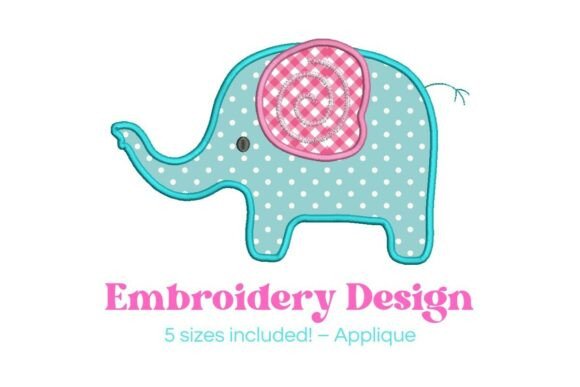
Baby Elephant Applique Embroidery
A Warm, Friendly First Impression for Small Business Branding
As an embroidery designer who’s developed hundreds of commercial designs for small businesses—from indie bakeries to boutique pet brands—I immediately recognize the tone and intention behind Baby Elephant Applique Embroidery. The name alone signals approachability, gentle charm, and tactile warmth—qualities that resonate deeply in the Nursery category but extend far beyond it. This isn’t just a decorative motif; it’s a machine embroidery design built on soft curves, balanced proportions, and intentional negative space. It reads as handmade product without sacrificing polish—friendly enough for a children’s boutique, refined enough for a premium florist’s apron or a local café’s staff tote bag.
Where Baby Elephant Applique Embroidery Shines in Real Business Use
This design excels where personality meets practicality. As an embroidered patch, it holds up beautifully on denim jackets, canvas tote bags, and woven backpacks—its applique style adds subtle dimension while keeping stitch density manageable for high-volume production. For apron embroidery, it works perfectly centered above a pocket or subtly placed on a sleeve cuff: friendly but not overwhelming, professional but never sterile. In cap embroidery, it scales well to 2.5"–3" front placements when digitized with clean underlay and appropriate pull compensation—ideal for creative studios or family-run farms offering branded merch.
Small business owners love how Baby Elephant Applique Embroidery bridges categories: a pet brand can use it on bandanas and leashes; a handmade soap maker can embroider it onto cotton muslin gift bags; a nursery-themed Etsy shop can apply it as a sew-on patch on organic cotton onesies or wooden toy packaging. It also performs strongly in commercial embroidery workflows—its clear silhouette and minimal interior detail reduce thread breaks and trimming time, especially across mixed fabric types like twill, linen blends, and medium-weight cotton duck.
Smart Placement Considerations for Long-Term Wear & Brand Consistency
While versatile, this design does require thoughtful application. Avoid using Baby Elephant Applique Embroidery at sub-1.75" sizes—especially on curved surfaces like cap fronts or rounded tote handles—where fine applique edges may blur or pucker. On dark uniforms (think charcoal chef coats or black aprons), confirm that the base fabric contrast supports legibility: test with light-thread outlines or a subtle satin-stitched border. Also, avoid pairing it with highly textured fabrics (e.g., bouclé or heavy corduroy) unless you’ve verified stabilizer compatibility—applique edges need crisp hold, not float.
Because it’s rooted in the Embroidery category and carries a gentle, nurturing aesthetic, consider how it aligns with your broader brand identity. If your logo is bold, geometric, and monochrome, this design may feel tonally mismatched unless used intentionally as a secondary asset—say, on customer thank-you tags or reusable shopping bags. But for brands built on warmth, care, and authenticity—think local bookshops, baby boutiques, eco-conscious crafters—it reinforces trust and emotional connection at first glance.
How It Elevates Customer Perception & Product Value
Customers don’t just see a baby elephant—they register intentionality, craftsmanship, and attention to detail. That perception directly lifts perceived value. A $28 tote bag with Baby Elephant Applique Embroidery feels more curated—and more worth gifting—than one with a generic heat transfer. For Etsy sellers and handmade brands, this design strengthens visual consistency across multiple touchpoints: from packaging accents to staff uniforms to printable mockups shared on social media. It signals that your small business merch isn’t an afterthought—it’s part of your story.
And because it leans into softness without sacrificing clarity, it invites engagement. Parents pause longer at a boutique window featuring this motif on signage or staff aprons. Customers photograph and share items featuring custom apparel with this design—not because it’s flashy, but because it feels genuine, memorable, and quietly confident.
Practical Designer Notes Before You Stitch
Before committing to production, run these checks:
- Test in black and white first—verify that shape integrity holds without color cues.
- Check scalability—does Baby Elephant Applique Embroidery retain clean edges at your intended patch size? Print a 1:1 paper template and hold it against real fabric.
- Review thread color contrast—especially if stitching on off-whites, creams, or heathers. Slight hue shifts affect readability.
- Inspect spacing and density—applique designs can trap lint or shift if inner fill stitches are too aggressive. Look for balanced tension between base fabric, applique layer, and outline.
- Confirm hoop size compatibility—some versions may require larger hoops than standard 4x4" setups, particularly if borders or background elements are included.
- Test on real fabric—run a sample on your most common substrate, using your go-to stabilizer stack. Applique behaves differently on knit vs. woven, lightweight vs. midweight.
- Create a printable mockup for client approval—show placement options on actual garment flats (e.g., chest, sleeve, cap front).
- Compare beside existing design assets—does it harmonize with your logo, typography, and other embroidered elements?
- Confirm commercial licensing before bulk production—this is non-negotiable for commercial embroidery and digital embroidery file resale or redistribution.
Remember: Baby Elephant Applique Embroidery isn’t just a cute motif—it’s a functional tool for building recognition, deepening customer relationships, and elevating your finished product from ordinary to ownable. When applied with intention, it becomes part of your brand’s quiet language—welcoming, trustworthy, and unmistakably yours.