Customizable Nautical Embroidery Design
First Impression: Charming, Cohesive, and Instantly Recognizable
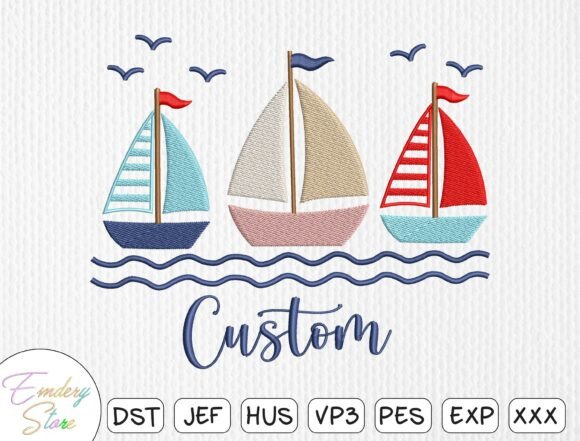
As an embroidery designer who’s curated over 200 craft fair booths in the past decade, my first reaction to Customizable Nautical Embroidery Design is immediate: it’s warm, approachable, and unmistakably summery—without leaning into cliché. The title alone evokes motion, memory, and handmade charm: “Sailboat Trio with Waves Birds” suggests rhythm, balance, and layered storytelling. Visually, I imagine soft curves, airy spacing, and a gentle hierarchy—three sailboats likely arranged diagonally or in a loose arc, with subtle wave lines and stylized birds adding movement but not clutter. It reads as cute rather than childish, rustic-modern rather than coastal kitsch, and handmade premium rather than mass-produced. That’s gold at a craft fair—where buyers scan tables in under three seconds.
Where This Design Shines on Craft Fair Products
Customizable Nautical Embroidery Design is exceptionally versatile—but not equally effective everywhere. Here’s where it delivers real sales impact:
- Tote bag design: Perfect as a medium-to-large focal point on the front panel. The trio composition fills space beautifully without overwhelming; customers love it on natural canvas or linen-blend totes—especially paired with navy, sand, or seafoam thread colors.
- Apron embroidery: Ideal for placement just above the pocket or centered on the bib. Its horizontal flow mirrors apron structure, and the nautical theme resonates strongly with foodie makers, coffee roasters, and boutique bakers.
- Tea towel embroidery: Works best when sized between 4.5"–6" wide. The waves and birds add visual interest against textured cotton towels—especially when stitched with matte cotton thread that catches light softly.
- Embroidered patch: Highly adaptable. As a sew-on or iron-on patch, it adds instant personality to denim jackets, market bags, or kids’ backpacks. Its clean outlines and balanced negative space ensure crispness even at 3" scale.
- Pillow cover & fabric pouch: Delivers high perceived value. When stitched on linen or chambray, the design feels intentional and giftable—ideal for summer housewarming or beach rental welcome kits.
Less ideal? Tiny cap fronts (unless simplified) and dense-textured terrycloth towels—where wave details may blur. Save it for smooth, stable surfaces first.
Production Realities: What Makes This Design Booth-Ready
This isn’t just pretty—it’s practical. As a working embroidery designer, I assess every machine embroidery design through the lens of batch production, booth efficiency, and customer conversion. Customizable Nautical Embroidery Design scores high because:
- It’s instantly legible at a glance—no decoding needed. Buyers recognize “sailboats + waves + birds” as joyful, seasonal, and personalizable.
- The trio layout allows natural scaling: small for patches or tags, medium for totes and aprons, large for pillow covers—without distortion or loss of character.
- It photographs cleanly for Etsy listings and printable mockups. Clean lines, defined shapes, and open spacing mean fewer retakes and faster listing turnaround.
- Its inherent customization hook (“personalized adventure”) invites conversation—making it a strong talking point during live craft fair interactions.
Careful-Use Notes Every Embroiderer Should Know
Even charming designs have limits. Before stitching your first craft fair product, test these variables:
- Dense stitch areas: If wave lines or sailboat sails are tightly filled, they may pucker on lightweight fabrics. Use cutaway stabilizer—not tear-away—on tea towels and linens.
- Tiny details: Bird silhouettes or rope textures smaller than 1.5mm may vanish on textured towels or dark fabric. Confirm clarity in your digital embroidery file preview before hooping.
- Curved cap surfaces: Avoid full-trio placement on front panels. Instead, use one sailboat + single bird as a subtle accent—preserving legibility and reducing hoop stress.
- Small sizes: Below 2.75", the composition risks flattening into a blob. Always run a test on scrap fabric at your intended size.
- Fabric texture & color: On charcoal or navy backgrounds, opt for high-contrast thread colors (ivory, sunshine yellow, or coral)—not off-white or beige.
Design Impact Beyond the Stitch
Customizable Nautical Embroidery Design strengthens your entire offering—not just individual items. It elevates perceived handmade quality by suggesting intentionality and narrative. It reinforces brand consistency across tote bags, aprons, and patches—creating a cohesive booth story that says “thoughtful summer maker,” not “random craft vendor.” Most importantly, it drives buyer engagement: customers pause, smile, point, and ask, “Can you add my name?” or “Do you do this on a beach towel?” That’s how impulse turns into loyalty—and how a small shop product becomes a signature line.
Pro Designer Checklist Before Production
Before cutting your first yard of fabric or uploading to Etsy:
- Test the embroidery file on scrap fabric matching your final product (e.g., unbleached canvas for totes, terry cloth for towels).
- Check thread contrast on both light and dark fabric swatches—don’t assume your default palette works universally.
- Review spacing between boats and birds: too tight = muddy; too wide = disconnected. Adjust if needed using your embroidery software.
- Confirm hoop size compatibility—especially if stitching on curved items like caps or pouches.
- Inspect stitch density visually and physically—run your finger over the test sample. Does it feel balanced, not stiff or sparse?
- Choose stabilizer based on fabric weight and texture—not habit. Lightweight cutaway is often the safest bet for Summer-themed handmade products.
- Create at least one real-world mockup: stitch it, photograph it in natural light, and hold it beside similar items in your booth lineup.
- Verify commercial licensing terms—if selling finished products, ensure your digital embroidery file permits commercial embroidery use.