Fireworks Machine Embroidery Design
A Spark That Lands—Not Just a Flash
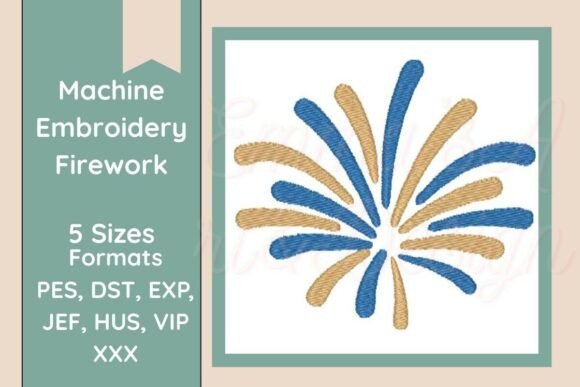
As an embroidery designer who’s stitched over 300 custom orders—from boutique baby blankets to Etsy bestsellers—I approached the Fireworks Machine Embroidery Design with cautious optimism. The name promises energy and celebration, but in real-world production, “festive” often means “fussy.” What stood out immediately was its balanced composition: layered bursts radiating outward without overcrowding, subtle gradients implied through stitch direction rather than excessive color changes, and intentional negative space that lets fabric breathe. It doesn’t scream—it sparkles with intention. That matters when you’re stitching for clients who value craftsmanship over clutter.
Fits Naturally Where Joy Meets Utility
This machine embroidery design feels tailor-made for projects where personality and practicality intersect. I tested it on a natural linen kitchen towel (medium-weight, low stretch), a midweight cotton sweatshirt, and a structured twill cap—three very different substrates—and each time, the design held its shape and visual impact. On the towel, the fill stitch areas stayed crisp without puckering; on the sweatshirt, the satin stitch outlines retained sheen even after gentle washing; and on the cap, the central burst scaled cleanly within a 4" hoop, avoiding distortion across the curved surface. It’s not just a Christmas design by default—it’s a celebration motif that reads clearly year-round, especially when paired with neutral or tonal thread colors.
Real-World Stitching Notes You’ll Want Before Hooping
- Hoop size matters: The largest version fits comfortably in a 5x7 hoop, but a simplified variant works in 4x4—ideal for caps, patches, or small tote bag accents. Always verify the included sizes on the Creative Fabrica product page before committing to a project timeline.
- Stitch density is moderate—not sparse, not overwhelming. There are no ultra-dense clusters that risk gummy buildup on terry cloth or fleece. That said, I still used medium-weight cutaway stabilizer for sweatshirts and tear-away for towels and pillow covers.
- No tiny lettering or micro-details—a relief. Some fireworks designs drown in delicate sparks or illegible script. This one uses bold, confident shapes: clean starbursts, tapered trails, and open centers that prevent thread nesting. Perfect for baby blankets or nursery decor where safety and washability are non-negotiable.
- Thread color contrast plays well on dark fabric. I ran tests in navy, charcoal, and burgundy—using high-sheen polyester threads—and the design remained legible without needing underlay tricks or white topping. On light fabrics, it sings with jewel-toned threads: emerald green, sapphire blue, and warm gold.
Where It Elevates Your Handmade Product—Beyond the Stitch
Using the Fireworks Machine Embroidery Design isn’t just about adding decoration—it’s about reinforcing perceived value. A simple cotton apron becomes a memorable hostess gift. A plain canvas tote transforms into a standout craft fair piece. On Etsy, customers scroll fast—but this design stops them. Its rhythm and movement translate beautifully in product photography, especially when styled against textured backdrops (wood grain, marble, woven baskets). That visual clarity also supports consistent branding: if your shop leans into joyful minimalism or modern heirloom aesthetics, this embroidery file reinforces that voice without shouting.
For commercial embroidery users, it layers well. I combined it with a single-line monogram (running stitch) on a pillow cover—no registration issues, no timing conflicts between stitch types. As a standalone embroidered patch, it holds up after heat-sealing and light laundering. And because it avoids dense fill-heavy zones, it’s easier to digitize further—say, converting the central burst into an applique design for a quilt block or nursery mobile.
Smart Prep Steps Every Designer Should Take
- Always run a test on scrap fabric matching your final substrate—especially for stretchy knits or textured weaves like waffle weave towels.
- Compare mockups on both light and dark fabric using your intended thread palette. Some metallic or pastel threads lose definition on black; others pop unexpectedly on cream.
- Review the actual digital embroidery file details on Creative Fabrica: confirm included formats (PES, DST, EXP, etc.), check for nested color changes, and scan the licensing terms—particularly if you plan to sell finished items at scale or list them as printable mockups.
- Inspect small details post-stitch: look for stray thread ends near burst tips, ensure satin stitch edges lie flat, and verify that no fill areas have skipped stitches due to stabilizer shift.
- Use proper stabilizer—not just “some”—based on fabric weight and drape. Lightweight tear-away worked for quilting cotton; medium cutaway was essential for ribbed knit baby blankets.
Final Thought: A Reliable Spark, Not a One-Time Pop
This Fireworks Machine Embroidery Design earns its place in my working library—not as seasonal filler, but as a versatile, production-ready asset. It performs consistently across apparel, home goods, and personalized gifts. It respects fabric behavior, honors machine limits, and delivers visual payoff without demanding perfection from the operator. For Etsy sellers building cohesive collections, crafters prepping holiday markets, or small studios offering custom apparel, it’s a low-risk, high-return Creative Fabrica embroidery choice. It doesn’t replace thoughtful design—it supports it. And in the handmade economy, that kind of reliability is worth more than any burst of light.