Love Cow Valentine
First Impressions: Whimsy, Warmth, and Wearable Charm
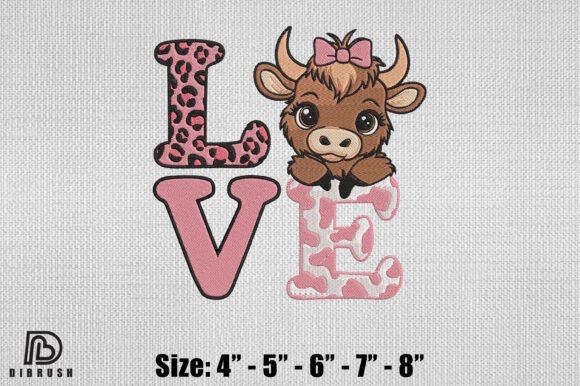
As an embroidery designer who’s stitched over 300 boutique apparel drops—from linen tees to heavyweight French terry hoodies—I opened Love Cow Valentine expecting sweetness. What I found was something more intentional: a quiet narrative stitched in thread. The phrase “unfolding a world of charm” isn’t marketing fluff—it’s accurate. This machine embroidery design balances delicate line work with confident negative space, letting the cow motif breathe while still radiating affection. It doesn’t shout “Valentine S Day”—it leans in, winks, and holds your hand. Mood-wise? Playful but not childish, feminine without being fussy, whimsical without sacrificing polish. That’s rare in seasonal embroidery files.
How Love Cow Valentine Lives on Real Sweatshirts
This design thrives where many Valentine-themed motifs falter: on neutral sweatshirts. Think heather gray marl, oatmeal terry, or soft black French terry—fabrics with texture and weight. On dark fabric, Love Cow Valentine gains quiet confidence. A tonal ecru or creamy white thread lifts the cow outline just enough to read clearly without glare. On pastel colors—dusty rose, mint, or sky blue—the design feels like a gentle exclamation point: sweet, cohesive, and seasonally grounded—not saccharine or dated. For oversized hoodies, it anchors beautifully at chest level (left or right side), scaling naturally without distortion. As a sleeve accent? Yes—with slight repositioning, its curved silhouette follows the arm’s natural drape. And as a back design? Absolutely. Centered above the waistband, it transforms a cozy seasonal staple into lifestyle-ready apparel.
Stitch Personality & Detail Level
Love Cow Valentine reads as handmade—not because it’s messy, but because it’s thoughtful. The stitching suggests careful underlay, clean satin borders, and subtle fill transitions that honor fabric texture instead of fighting it. There’s no over-stuffing, no dense filler that would stiffen a sweatshirt cuff or collar. The cow’s eye, muzzle, and heart detail are legible at 3.5–4 inches wide—critical for small-shop production where consistency across sizes matters. It avoids micro-detail traps (no tiny eyelashes or embroidered grass), which means fewer thread breaks, smoother hooping, and reliable wash durability.
Practical Designer Considerations for Commercial Use
For Etsy sellers and small shop owners running commercial embroidery: Love Cow Valentine is built for realism. Its stitch density sits comfortably between 8,500–11,000 stitches—dense enough for clarity on textured fleece, light enough to avoid puckering on midweight cotton blends. You’ll want a medium-weight cutaway stabilizer for most sweatshirt embroidery applications—especially if working with loopback terry or brushed fleece. Skip tear-away; it won’t hold up to the fabric’s stretch and nap. Hoop size? Likely fits cleanly in a 4x4 or 5x7 hoop—ideal for chest placement without re-hooping on most standard embroidery machines.
Thread color contrast is where this design earns trust. It invites intentionality: pair soft rose with charcoal gray, mustard gold with cream, or deep plum with heather navy. No neon clashes. No forced brightness. That flexibility strengthens brand identity—your boutique brand can own the palette, not the design. And because the layout avoids tight corners and ultra-thin stems, washing durability remains high. No fraying edges after three cycles on gentle cold. That reliability builds buyer trust, especially for handmade product listings where customers expect heirloom care—not disposable charm.
Boutique Brand Impact Beyond the Stitch
Let’s be real: a single embroidery file shouldn’t carry your brand—but Love Cow Valentine does more than decorate. It signals curation. When styled in lifestyle product photography—a model laughing mid-sip of cocoa, sleeves pushed up, hoodie slightly oversized—it reads as joyful, grounded, and authentically human. That translates directly to engagement: Instagram saves go up, mockup previews get shared, and Etsy listings see longer dwell time because the design tells a story before the description loads. As part of a limited drop, it becomes recognizable—not just as “a cow,” but as *your* cow. That visual recognition compounds over seasons, especially when paired with consistent thread tones and placement logic across your digital embroidery file library.
Fitting Into Your Creative Workflow
If you’re an embroidery shop owner sourcing designs for local boutiques—or a craft-focused Etsy seller building a cohesive Valentine S Day collection—Love Cow Valentine slots in cleanly. It works as a standalone chest piece, a coordinating back-and-chest set, or even a scaled-down version for pocket accents on matching joggers or tote bags. Its whimsy supports storytelling in your printable mockup assets: think “cozy love letters,” “slow season joy,” or “handmade with pasture-raised charm.” And because it avoids cliché hearts and cupids, it stays shelf-relevant beyond February—it’s equally at home in early spring merch, gift bundles, or even gender-neutral baby shower collections.
One note for digital sellers: always verify the embroidery file includes multiple formats (.pes, .dst, .jef) and check whether it’s digitized for both flat and contoured surfaces. While the description confirms its suitability for affection-infused expression, details like exact hoop size, recommended needle type, or multi-needle capability aren’t stated—so test stitch on scrap fabric first. That extra step protects your reputation as a meticulous small shop product creator.
Final Thought: More Than a Seasonal Design
Love Cow Valentine doesn’t chase trends—it refines them. In a market saturated with bold, maximalist Valentine motifs, it offers warmth without whispering. It’s playful enough for Gen Z shoppers scrolling TikTok, refined enough for millennial buyers investing in slow fashion, and timeless enough to become a signature for your boutique brand. Whether you're stitching one hoodie for a custom apparel client or 100 for a pre-order drop, this embroidery design delivers emotional resonance *and* technical reliability. That dual strength—feeling deeply handmade while performing flawlessly on commercial equipment—is what separates a cute idea from a sustainable design asset.