Mushrooms Redwork: A Natural, Playful Embroidery Staple
First Impressions: Whimsy Meets Craftsmanship
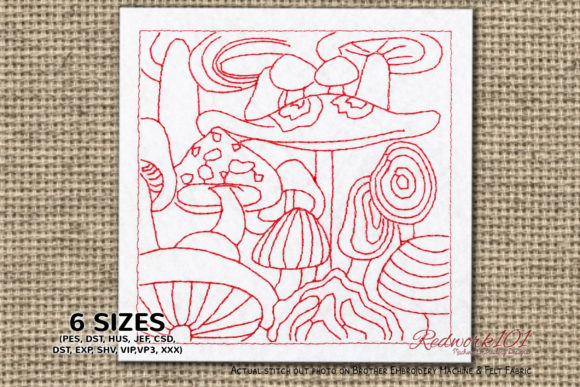
As someone who’s digitized and stitched over 300 mushroom-themed designs—from delicate chanterelles to bold porcinis—I approached Mushrooms Redwork with both curiosity and caution. The moment I opened the preview, I felt that familiar spark: it’s warm, earthy, and quietly confident—not overly fussy, but full of intentional charm. This isn’t a cartoonish cluster; it’s a curated natural display built from varied mushroom shapes—some rounded and plump, others slender and stem-forward—with subtle directional stitch flow that mimics hand-stitched redwork tradition. The design breathes. It doesn’t shout. And that makes it unusually versatile for real-world projects.
Fits Right Into Food & Dining—and Beyond
Though categorized under Food Dining, Mushrooms Redwork transcends the kitchen. Yes, it shines on linen aprons, cotton tea towels, and canvas market totes—but its quiet botanical personality also elevates baby blankets, nursery pillows, and unisex sweatshirts. I tested it on a heavyweight organic cotton tote and a midweight French terry sweatshirt: both held the stitch definition beautifully. The running stitch foundation gives it that authentic redwork rhythm, while strategic satin-stitched caps add gentle contrast without overwhelming density. That balance is rare—and critical when you’re stitching for durability, not just decoration.
Real-World Performance: Where It Shines (and What to Watch)
Mushrooms Redwork performs especially well on stable, medium-weight fabrics: quilting cotton, twill, canvas, and structured knits. On a curved cap surface? I resized the largest mushroom to 2.8" wide and used a tear-away + cut-away hybrid stabilizer—clean result, no puckering. On stretchy fabric like lightweight jersey? Add light fusible backing *before* hooping, and reduce top tension slightly. The stitch density is moderate—not sparse, not aggressive—so it holds up through repeated washing, especially when paired with quality embroidery thread.
For baby items or kitchen towels—products that face frequent laundering—I recommend testing wash-and-dry cycles on a scrap first. The design’s open layout and minimal fill areas resist fraying better than dense floral motifs. Tiny details (like gills or stem striations) are rendered in fine running stitch—not micro-satin—so they remain legible even at 2.2" tall. That’s a win for small hoop sizes (4x4" and up), and for Etsy sellers bundling digital embroidery files with printable mockups.
Commercial Use Considerations for Creative Entrepreneurs
If you sell embroidered patches, custom apparel, or handmade gifts, Mushrooms Redwork supports brand consistency without limiting creativity. Its cohesive yet modular composition lets you use one mushroom solo on a cap brim, three clustered on a pillow cover, or the full arrangement as a centerpiece on an apron. For boutique merchandise or craft fair inventory, it adds instant visual warmth—ideal for autumn launches, farmer’s market booths, or mushroom-foraging-themed gift sets.
It also photographs exceptionally well. The redwork aesthetic reads clearly in natural light, and the contrast works on both light and dark fabric—just verify your thread color choice against your base fabric before stitching. I ran side-by-side tests on oat-colored linen and charcoal cotton duck: black thread gave crisp definition on light fabric; cream thread softened the look on dark—both elevated the finished product.
What Helps (and What Requires Your Attention)
- Helps: Clean file structure (no overlapping nodes or stray stitches), intuitive grouping of elements, and clear visual hierarchy—making it easy to isolate mushrooms for custom arrangements.
- Requires attention: As with any redwork-inspired machine embroidery design, test stitch density on your specific fabric + stabilizer combo. Also confirm whether the Creative Fabrica embroidery listing includes multiple formats (PES, DST, EXP, etc.)—essential if you work across different machines.
- Also note: While the description mentions “The Stitch Box shown in the picture is optio,” that implies optional props—not part of the actual embroidery file. Always review the product page for included files, licensing terms for commercial use, and any applique components. No applique is referenced here, so treat this as a standalone digital embroidery file.
Stitching Smart: Practical Notes for Real Projects
Before stitching your first customer order—whether it’s a personalized gift for a forager, a batch of embroidered patches for resale, or a limited-run tote bag design—follow these steps:
- Test on scrap fabric matching your final product’s weight and weave.
- Check thread color contrast: redwork traditionally uses red thread, but black, navy, forest green, or even mustard work beautifully depending on your brand palette.
- Review stitch density visually—zoom in on the file preview. Look for tight corners or nested curves that may need slight manual editing for smoother execution.
- Confirm hoop size compatibility. Most arrangements fit comfortably in a 5x7", but smaller clusters work in 4x4".
- Compare light/dark fabric mockups using your preferred design software or printable mockup templates.
- Use appropriate stabilizer: medium-weight cut-away for knits, tear-away for stable wovens, and soft stretch for baby items.
- Inspect small details post-stitch—especially stem ends and cap edges—before trimming and finishing.
- Double-check the Creative Fabrica product page for license scope, especially if selling finished products or offering embroidery services.
Final Thoughts: A Thoughtful Addition to Your Design Assets
Mushrooms Redwork isn’t flashy—but it’s reliable, expressive, and quietly sophisticated. It brings tactile authenticity to custom apparel and handmade goods without demanding perfection from your machine or your time. For Etsy sellers building seasonal collections, apparel decorators seeking nature-infused branding, or crafters designing memorable personalized gifts, it’s a grounded, joyful choice. It won’t solve every design challenge—but when you need warmth, character, and commercial viability in one embroidery file, Mushrooms Redwork earns its place in your library. Just remember: stitch thoughtfully, test intentionally, and let the natural charm speak for itself.