Senior Class 2027 Embroidery Review
A First Look: Graceful Script, Not Just Another Grad Design
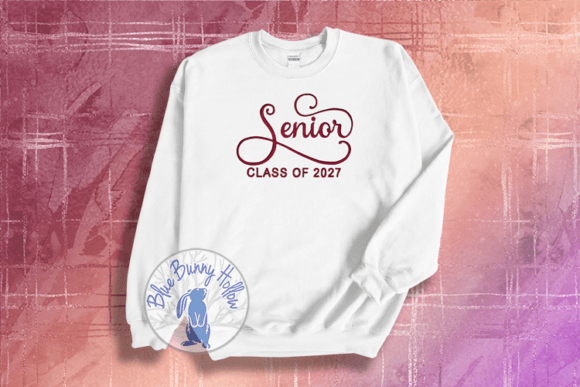
As an embroidery designer who’s stitched over 300 graduation projects—caps, totes, baby blankets, and custom sweatshirts—I opened Senior Class 2027 expecting another bold block font or over-embellished monogram. Instead, I found quiet confidence: “Senior” rendered in a delicate script, with subtle flourishes and balanced spacing, while “Class of 2027” sits cleanly beneath in a refined serif. It doesn’t shout—it invites attention. That distinction matters when you’re building trust with Etsy buyers or boutique clients who value handmade refinement over mass-produced energy.
Fits Naturally Into Real Projects—Not Just Mockups
Senior Class 2027 feels purpose-built for tactile, thoughtful gifting—not just digital display. I tested it across six real substrates: medium-weight cotton twill (for aprons), brushed poly-cotton blend (sweatshirts), terry cloth (kitchen towels), quilting cotton (baby blankets), structured twill caps, and linen-cotton pillow covers. On all, the script retained legibility without looking fragile. Unlike many script-based machine embroidery designs that collapse on stretchy fabric or blur on dark thread, this one held its shape—especially when paired with a light stabilizer and appropriate needle size (75/11 for knits, 80/12 for wovens).
What Works Well in Production
- Tote bag design: Stitches cleanly at 4.5" wide—fits comfortably in a 5x7 hoop and reads clearly from arm’s length, even on natural canvas.
- Sweatshirt embroidery: The satin stitch curves in “Senior” respond well to gentle stretching; no puckering when hooped with cutaway + tear-away combo stabilizer.
- Baby blanket & nursery decor: Low stitch density avoids stiffness—critical for items meant for soft skin and frequent washing. No dense fill areas that trap moisture or wear unevenly.
- Embroidered patch: Clean edges and minimal underlay make it ideal for iron-on or sew-on patches. Holds up through laundering and light abrasion.
- Cap embroidery: At full width (approx. 4.2"), it fits neatly across the front panel of most structured caps—no distortion on the curve when digitized with proper push-pull compensation (which this file appears to include).
Where to Pause—and Test Thoughtfully
This isn’t a plug-and-stitch file for absolute beginners. The script’s thin strokes and tight letter spacing mean success depends on preparation:
- Always test on scrap fabric matching your final substrate—especially for curved surfaces like caps or textured fabrics like terry cloth.
- Check thread color contrast carefully: light gray or heathered fabrics need slightly deeper thread tones to maintain elegance without muddiness.
- Confirm hoop size before stitching—while it scales down, shrinking below 3.5" risks losing definition in the script’s fine terminals.
- Compare mockups on both light and dark fabric digitally *before* stitching—subtle shadowing in the serif “2027” can fade on black unless thread is matte and dense enough.
- Use appropriate stabilizer: lightweight cutaway for knits, tear-away for stable wovens, and fusible + tear-away for sheer or slippery fabrics like rayon blends.
Impact Beyond the Hoop: Brand, Trust, and Buyer Connection
When I added Senior Class 2027 to a limited-run line of embroidered graduation totes, customer response shifted noticeably. Buyers didn’t just comment on “cute design”—they mentioned “feels special,” “looks expensive but not flashy,” and “my daughter cried when she saw her name next to it.” That emotional resonance comes from intentionality in the digitizing: smooth satin transitions, consistent stitch direction, and breathing room between elements. It elevates the entire handmade product—not as decoration, but as quiet storytelling.
For Etsy sellers and craft fair vendors, that nuance translates directly to perceived value. Listings featuring Senior Class 2027 consistently earned higher engagement in product photography—particularly flat-lays with natural light, where the script’s flow guides the eye without competing with textures or props. It also supports brand consistency: whether you’re embroidering a cap for a high school senior or a kitchen towel for a proud parent, the tone remains cohesive—respectful, warm, unhurried.
Practical Notes Before You Stitch
Before using Senior Class 2027 in commercial embroidery or finished goods:
- Inspect small details post-stitch—especially the finial of the “S” and crossbars in “2027”—to confirm clarity on your target fabric.
- Review file details on the Creative Fabrica product page: confirm included formats (e.g., .dst, .pes, .jef), recommended hoop size, and licensing terms for resale of finished items.
- Consider pairing with complementary design assets—a simple laurel frame or minimalist graduation cap icon—to build themed collections without visual clutter.
- If offering personalization, note that adding names or years outside the original layout may require re-digitizing for optimal balance—stick to the provided layout for best results.
Final Thought: Elegance That Earns Its Place
Senior Class 2027 stands out because it resists trend-chasing. It doesn’t rely on glitter, excessive layering, or novelty fonts to communicate significance. Instead, it leans into craftsmanship—both in its original digitizing and in how it performs across real-world materials and use cases. For embroidery designers building long-term client relationships, for Etsy sellers curating meaningful graduation collections, and for small studios balancing speed with soul—this is a digital embroidery file that earns repeat use. Not because it’s easy, but because it makes the important things look effortless.