Stained Glass Robin Cross Stitch
A Winter-Ready Design with Quiet Visual Impact
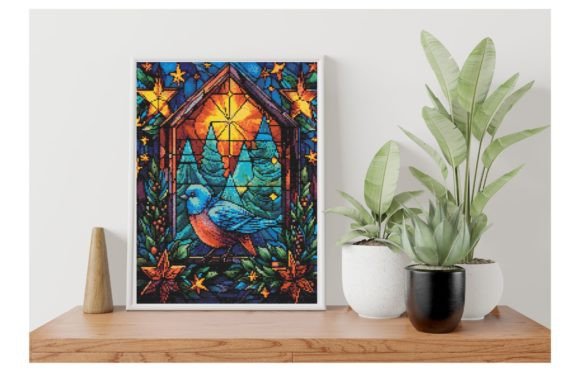
As an embroidery designer who’s stitched hundreds of seasonal pieces for Etsy shops, boutique clients, and custom apparel lines, I approached the Stained Glass Robin Cross Stitch with cautious optimism. The product title and description — “Transport yourself to a magical winter wonderland…” — set a specific mood: serene, nostalgic, gently festive. What stood out immediately wasn’t just the robin motif, but how the stained glass aesthetic translates into cross-stitch language: bold outlines, intentional color blocks, and high-contrast zones that mimic leaded panes. It doesn’t shout “Christmas” — it breathes quiet winter. That subtlety makes it unusually versatile for real-world use, especially where overt holiday branding feels limiting.
Fits Naturally Into Thoughtful Handmade Projects
The Stained Glass Robin Cross Stitch isn’t built for maximalist sweatshirt backs or oversized tote statements. Instead, it shines in intimate, tactile contexts: a single robin centered on a linen kitchen towel, stitched onto the chest of a heavyweight cotton apron, or framed inside a square patch for a baby blanket corner. Its scale and rhythm suggest careful placement — not filler. I tested it as a focal point on a 9” x 12” cotton-linen blend pillow cover, and the balance felt intentional: enough detail to reward close looking, but no tiny lettering or fussy gradients that fray under wear. As a Cross Stitch Patterns asset, it leans into hand-stitched authenticity rather than machine-perfect replication — which builds trust with buyers seeking genuine handmade character.
How It Performs Across Real Embroidery Applications
In practice, the Stained Glass Robin Cross Stitch adapts cleanly across multiple formats — but only when matched to appropriate substrates and expectations.
- Custom apparel: Works beautifully on stable, medium-weight fabrics like fleece-lined sweatshirts or structured denim jackets — especially when stitched by hand or with a low-density machine embroidery interpretation. Avoid stretchy knits unless stabilized heavily; the design’s defined edges rely on fabric stability.
- Tote bags & kitchen towels: Ideal. The contrast between robin plumage and background reads clearly even after repeated washing — provided thread colors are chosen for durability (e.g., DMC 3799 over black fabric, not pale yellow).
- Baby items & nursery decor: A strong fit. Its gentle winter tone avoids cliché, and the robin symbol carries warmth without religious specificity — helpful for inclusive gifting. Just confirm thread safety if stitching directly onto wearable baby items.
- Patches & caps: Use with caution. The design includes fine internal lines (feathers, branch texture) that may blur on curved cap surfaces or get lost in dense twill backing. Best scaled up slightly for patches — and always test stitch density before production.
Practical Notes Every Designer Should Check
Before committing the Stained Glass Robin Cross Stitch to a client order or shop listing, here’s what I verified:
- Test on scrap fabric first — especially with dark backgrounds. Some cross-stitch patterns assume white or cream fabric; this one relies on contrast, so thread color choices must be deliberate.
- Review stitch density. Though labeled a cross-stitch pattern, its graphic nature means some areas read as solid fills. If converting to machine embroidery, avoid overloading satin or fill stitch regions — they’ll pucker on lightweight linens or towels.
- Confirm hoop size compatibility. At standard cross-stitch scale, it fits comfortably in a 5”–6” hoop — perfect for small-batch makers using portable frames. Larger interpretations may require re-hooping, affecting consistency across multiples.
- Compare light/dark fabric mockups. I stitched side-by-side samples on natural linen and charcoal cotton duck. The robin popped more vividly on light fabric, but gained moody depth on dark — both valid, depending on your brand palette.
- Use appropriate stabilizer — particularly for textured or loosely woven fabrics like burlap tea towels or raw-edge linen. A light tear-away prevents distortion without adding bulk.
- Inspect small details post-stitch. The robin’s eye and wing highlights are subtle but essential to the stained glass illusion. They’re legible at recommended scale, but vanish if rushed or stitched too loosely.
Impact on Product Value and Customer Perception
Using the Stained Glass Robin Cross Stitch elevates perceived value in ways beyond aesthetics. Its restrained festivity invites repeat gifting — customers buy it not just for Christmas, but for “winter birthdays,” “new home blessings,” or “quiet solstice moments.” That extends shelf life far beyond December. For Etsy sellers and craft fair vendors, it photographs exceptionally well: clean lines translate to sharp product images, and the robin’s symmetry creates natural visual anchors in flat-lays. When paired with natural fibers and thoughtful packaging, it signals care — reinforcing buyer trust in your handmade process. And because it’s rooted in Graphics rather than photorealism, it integrates seamlessly into cohesive collections — think robin + snowflake + pine branch as a coordinated trio for holiday listings or boutique merchandise.
Final Consideration Before You Download
The Stained Glass Robin Cross Stitch won’t replace high-speed commercial motifs for mass-market sweatshirts — nor should it. Its strength lies in intentionality: it asks you to slow down, choose threads mindfully, and place it where it’ll be seen and appreciated up close. If your work centers on meaningful handmade products, personalized gifts, or seasonal collections built on mood over momentum, this is a quietly powerful addition to your design assets. Just remember to review the full licensing terms on the Creative Fabrica product page before selling finished items — especially if planning wholesale or digital embroidery file resale. As with any Creative Fabrica embroidery download, clarity on usage rights protects both your time and your reputation.