Coffee Time Easy Cross Stitch Pattern
First Impression: Quirky, Approachable, and Instantly Relatable
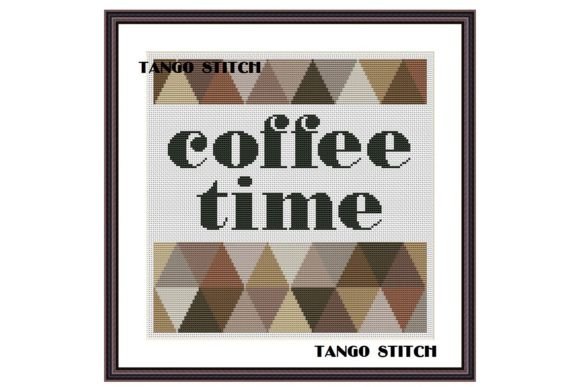
As an embroidery designer who’s curated over 200 craft fair booths—and shipped thousands of handmade products—I opened Coffee Time Easy Cross Stitch Pattern expecting charm, not complexity. And it delivered. The title alone signals clarity and audience alignment: “Coffee Time” is warm and universal; “Easy” reassures beginners and time-crunched makers; “Cross Stitch Pattern” sets precise category expectations. From the description—“coffee time for caffeine addicts,” “quirky,” “Tango Stitch”—I immediately sensed a lighthearted, modern-farmhouse vibe with just enough wit to stand out in a sea of florals and monograms. It doesn’t try to be elegant or vintage—it leans into joyful, caffeinated authenticity. That’s gold at craft fairs.
Where This Pattern Shines on Handmade Products
Coffee Time Easy Cross Stitch Pattern thrives where personality meets practicality. On tote bag designs, it reads cleanly at 3.5–4 inches wide—large enough to catch eyes across a crowded aisle but small enough to leave room for branding or complementary stitching. As apron embroidery, centered above the pocket, it adds instant character without overwhelming the garment’s function. For tea towel embroidery, it holds up beautifully on medium-weave cotton—especially when stitched with high-contrast thread (think espresso brown on cream or white-on-charcoal). The coffee motif reads instantly, even from six feet away—a critical advantage when shoppers are scanning dozens of kitchen textiles in under ten seconds.
As an embroidered patch, this design scales down well to 2.25 inches—ideal for iron-on or sew-on applications on denim jackets, market bags, or kids’ backpacks. On caps, it works best on front panels with flat crowns (avoid curved visors unless digitized for machine embroidery with proper underlay). For small pouches and pillow covers, it anchors the composition without competing with fabric prints—making it a strong candidate for boutique bundles (e.g., “Coffee Lover Kit”: pouch + tea towel + embroidered keychain).
Real-World Selling & Production Readiness
This isn’t just pretty—it’s booth-ready. Coffee Time Easy Cross Stitch Pattern is easy to understand at a glance: no ambiguous symbols, no nested motifs, no tiny flourishes that vanish at 2x scale. That means faster customer conversations (“Yes—that’s the coffee one!”), quicker mockup creation, and smoother batch production. It photographs exceptionally well for Etsy listings and printable mockups: clean lines, balanced negative space, and strong silhouette ensure crisp thumbnails and scroll-stopping social posts.
It’s also highly repeatable. Whether you’re stitching 12 matching tea towels for a wholesale order or embroidering 50 tote bags for a local café collab, the consistency stays high—provided you maintain uniform tension and thread quality. As a digital embroidery file or cross stitch pattern, its simplicity reduces risk of misinterpretation across skill levels, which matters when training part-time booth helpers or outsourcing stitch work.
Careful-Use Notes for Craft Fair Sellers
- Dense stitch areas: If the coffee cup interior or steam swirls are tightly packed, test on your target fabric first—high stitch density can cause puckering on lightweight linen or stiffen textured towels.
- Tiny details: Avoid shrinking below 1.75 inches—steam lines or lettering like “caffeine addicts” may blur or disappear on dark fabric or thick weaves.
- Curved surfaces: Not ideal for full-coverage cap embroidery without professional digitizing adjustments. Stick to flat-front placements or use as a patch instead.
- Fabric texture: Works best on smooth-to-medium weaves (quilting cotton, canvas, twill). Avoid heavily napped or ribbed fabrics unless you reinforce with cutaway stabilizer.
Design Impact: Booth Presence, Brand Voice & Buyer Connection
In a craft fair context, Coffee Time Easy Cross Stitch Pattern punches above its size. It boosts visual appeal without shouting—drawing coffee lovers, gift buyers, and self-proclaimed “function-over-form” crafters alike. Its humor feels genuine, not forced, reinforcing handmade integrity and brand consistency for small shop owners. When displayed as a finished product—say, on a hanging apron beside a real ceramic mug—it sparks conversation, increases dwell time, and lifts perceived value. Customers don’t just see stitching—they see identity, ritual, and shared energy.
For Etsy sellers and digital designers, this pattern strengthens design assets libraries: it pairs effortlessly with neutral palettes, supports seasonal variations (add a snowflake for winter, a sun for summer), and fits cleanly into themed collections (“Morning Rituals,” “Cafe Core,” “Small Shop Staples”). As a graphics-based cross stitch pattern, it bridges analog and digital workflows—ideal for hybrid sellers offering both printable PDFs and finished goods.
Embroidery Designer’s Must-Do Checklist
- Test Coffee Time Easy Cross Stitch Pattern on scrap fabric matching your intended finished product (e.g., canvas for totes, terry cloth for towels).
- Check thread colors for contrast—especially if using dark backgrounds. Espresso + cream reads warmer than black + white.
- Review spacing between elements: Does the steam curl have breathing room? Is the cup base stable on uneven fabric?
- Confirm hoop size compatibility—most versions will fit standard 4×4 or 5×7 hoops, but verify before cutting production runs.
- Inspect stitch density in tight zones; add light tear-away stabilizer if needed for structured items like caps or pouches.
- Create at least one real mockup—not just a digital render—to assess drape, texture interaction, and true-to-life scale.
- Compare how it looks on multiple fabric colors—cream, oat, charcoal, and navy—to guide inventory decisions.
- Confirm commercial licensing status before selling finished products. If unlicensed, reach out to Tango Stitch for terms—this protects your small shop product line and future wholesale opportunities.
Bottom line: Coffee Time Easy Cross Stitch Pattern isn’t just another design—it’s a quiet sales accelerator. It’s the kind of craft fair product that sells itself through recognition, relatability, and executional ease. For embroidery business owners, Etsy sellers, and creative entrepreneurs building a cohesive, scalable handmade brand, this pattern earns its place front-and-center—on the booth table, in the listing gallery, and stitched proudly onto the next bestseller.