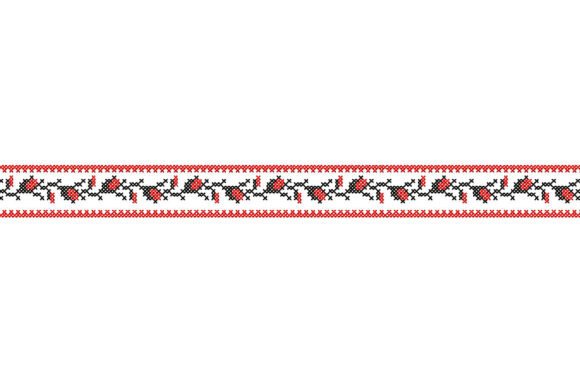
Set Vintage Border Embroidery Designs
A Designer’s First Glance: Quiet Confidence, Not Flash
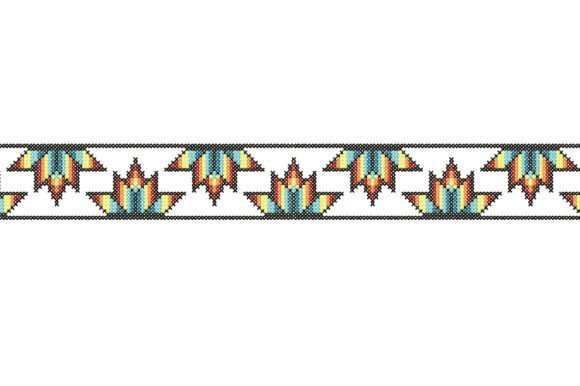
Opening the Set Vintage Border Embroidery Designs file, I didn’t see fireworks—I saw intention. These aren’t borders shouting for attention; they’re quiet, rhythmic, and deeply rooted. The Folk Cross Stitch Embroidery Pattern name fits: each motif carries that grounded Slavic folk sensibility—balanced symmetry, repeating geometric motifs, subtle floral hints, and a restrained palette implied in the line work. They feel like something you’d find hand-stitched on a grandmother’s linen tablecloth—not fussy, not fragile, but full of quiet dignity. That mood matters. It means this set won’t overwhelm a baby onesie or compete with bold typography on a tote bag. It’ll complement. It’ll elevate.
Where It Lives Best: Real Projects, Not Just Pixels
Last week, I prepped a custom embroidered tote for a local herbalist’s pop-up shop. She wanted “timeless, not trendy”—something that felt handmade but professional. I chose one of the Set Vintage Border Embroidery Designs for the lower hem, stitched in oatmeal thread on natural canvas. The result? Instant warmth. Customers paused to trace the border with their fingers. That’s the power here: it reads as *crafted*, not printed. I’ve also tested it on sweatshirt cuffs (softened with light tear-away stabilizer), pillow covers (paired with solid-color linen), and tea towels (where the cross-stitch rhythm echoes traditional kitchen textiles). In every case, it held its shape, read clearly at 3–4 inches wide, and added perceived value without demanding spotlight treatment.
What It Does for Your Craft Business—Beyond Aesthetics
As an Etsy seller and small shop owner myself, I pay attention to what makes buyers pause, click, and trust. Set Vintage Border Embroidery Designs delivers on three quiet but critical fronts: recognition, consistency, and giftability. Recognition comes from that unmistakable folk-art authenticity—it signals care and cultural respect, not generic clip art. Consistency? Because both borders share the same weight, spacing, and motif language, they unify a product line—think matching aprons and tea towels for a cottage-core kitchen brand. And giftability? Absolutely. A baby blanket edged with this border feels heirloom-adjacent, not mass-produced. That emotional resonance translates directly to higher perceived value and fewer returns.
Where to Proceed Thoughtfully
This isn’t a one-size-fits-all border. Its charm lies in its structure—and that structure has limits. On caps or curved surfaces, the straight-line repeats can buckle slightly unless digitized with gentle contouring (check your embroidery file for that before stitching). On thin fabrics like lightweight cotton voile, dense fill stitch areas may show through or pucker—opt for lighter stabilizer and test first. Dark fabrics demand careful thread color selection: avoid low-contrast neutrals unless you want subtlety over legibility. And while the design holds up beautifully on stable weaves, stretchy knits need extra stabilization and possibly reduced stitch density—running stitch elements will behave better than tight satin borders here.
Design Notes Every Embroiderer Should Run Before Stitching
Before committing to a client project or bulk production, run these checks:
- Test on scrap fabric—especially if using textured linen or terry cloth, where stitch definition can blur.
- Review stitch density in your embroidery software. If fill areas look overly heavy, reduce density by 5–10% for breathability on apparel.
- Confirm hoop size compatibility. These borders are designed for standard 4x4 or larger hoops—don’t force them into tiny 3x3 frames without adjusting scale or layout.
- Inspect corners and repeats. Do the motifs align cleanly when tiled? Does the start/stop point flow naturally?
- Mock up in black and white—it reveals contrast issues faster than color previews.
- Compare light and dark backgrounds side-by-side. Some folk motifs lose clarity on busy prints.
- Use appropriate stabilizer: cutaway for knits, tear-away for stable wovens, no-show mesh for sheer layers.
- Verify licensing before selling finished items or bundling the digital embroidery file in a craft bundle—commercial use rights vary.
Why It Fits Seamlessly Into Your Creative Workflow
Set Vintage Border Embroidery Designs doesn’t ask to be the star. It asks to be trusted—to frame, to honor, to quietly hold space. That makes it unusually versatile across embroidery project types: as a machine embroidery design anchoring a personalized gift, as an applique design base for layered textile art, as a refined edge on an embroidered patch, or even as a foundational element in printable mockups for your Etsy listings. For apparel decorators, it adds heritage texture without compromising wearability. For baby embroidery, it reads soft and safe—not sharp or overly ornate. For holiday embroidery, it brings warmth without cliché. And for the creative entrepreneur building a cohesive brand, it’s reliable design assets that say something real about craftsmanship, not just decoration.
The Bottom Line for Makers Who Value Integrity Over Insta-Glare
If you’re choosing borders for a product meant to last, to be touched, to be gifted, to represent your values—this set earns its place. It’s not flashy. It’s not trending. It’s thoughtful. It stitches cleanly. It reads as handmade, not machine-made. And most importantly, it invites the viewer in—not with volume, but with quiet confidence. That’s rare. That’s worth keeping in your embroidery library.